
Fit Kaki’s signature assessment
Understand your Strength Age
Muscle decline can happen quietly as we age. Strength Age helps seniors and families understand current strength in a simple, relatable way — and track progress as strength improves over time.
Free, friendly, and done at our Eunos studio or our community locations.
The quiet change
Muscle loss is not always obvious at first.
Strength can fade gradually for years before it shows. Many seniors only notice when everyday movements start to feel different:
Getting up from a chair feels harder
Stairs feel more tiring than before
Balance feels less steady
Carrying groceries becomes harder
Getting up safely from the toilet becomes difficult
Recovering from a stumble is harder
None of these mean it is too late. They are simply signs that strength deserves attention — and strength can be rebuilt at any age, with the right support.
What it is
What is Strength Age?
Strength Age is Fit Kaki's signature way of helping seniors understand their current strength in simple, relatable terms.
Instead of technical scores, it answers a question every family understands: how strong am I today, and how is that changing? It helps with:
understanding your current strength
identifying a safe starting point
guiding programme recommendations
tracking progress over time
supporting motivation as strength improves
Your Strength Age gives you a clear starting point — then shows strength being rebuilt, session by session.
The assessment
What happens during the assessment
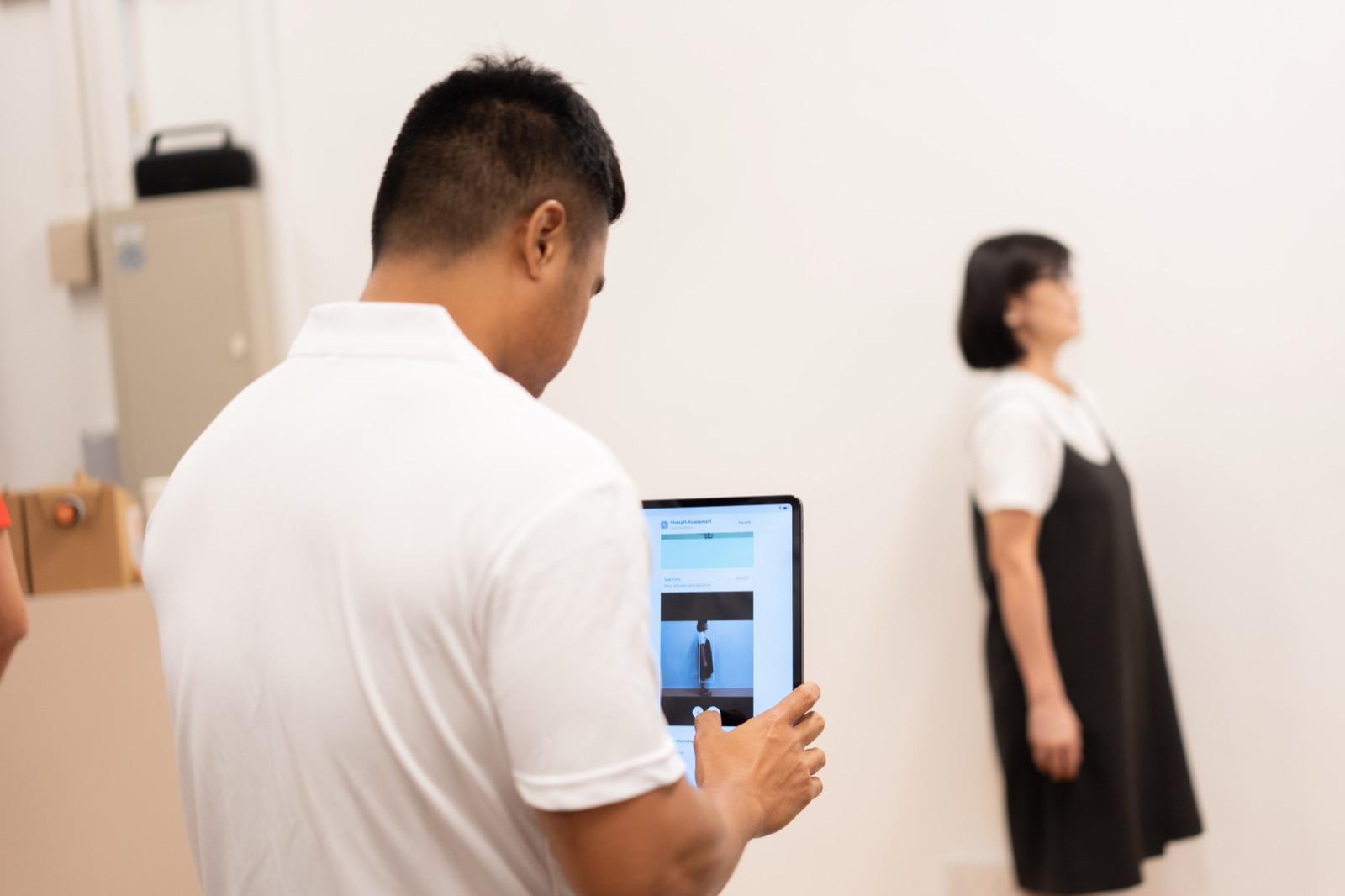
A Fit Kaki coach will guide you through simple strength and movement checks, then explain what the results mean in plain language.
- Grip strength
- Lower-body strength
- Movement confidence
- Balance-related observations
- Daily movement concerns
Nothing strenuous, no equipment experience needed — wear comfortable clothes and come as you are. Family members are welcome to join and listen.
See your starting point — literally
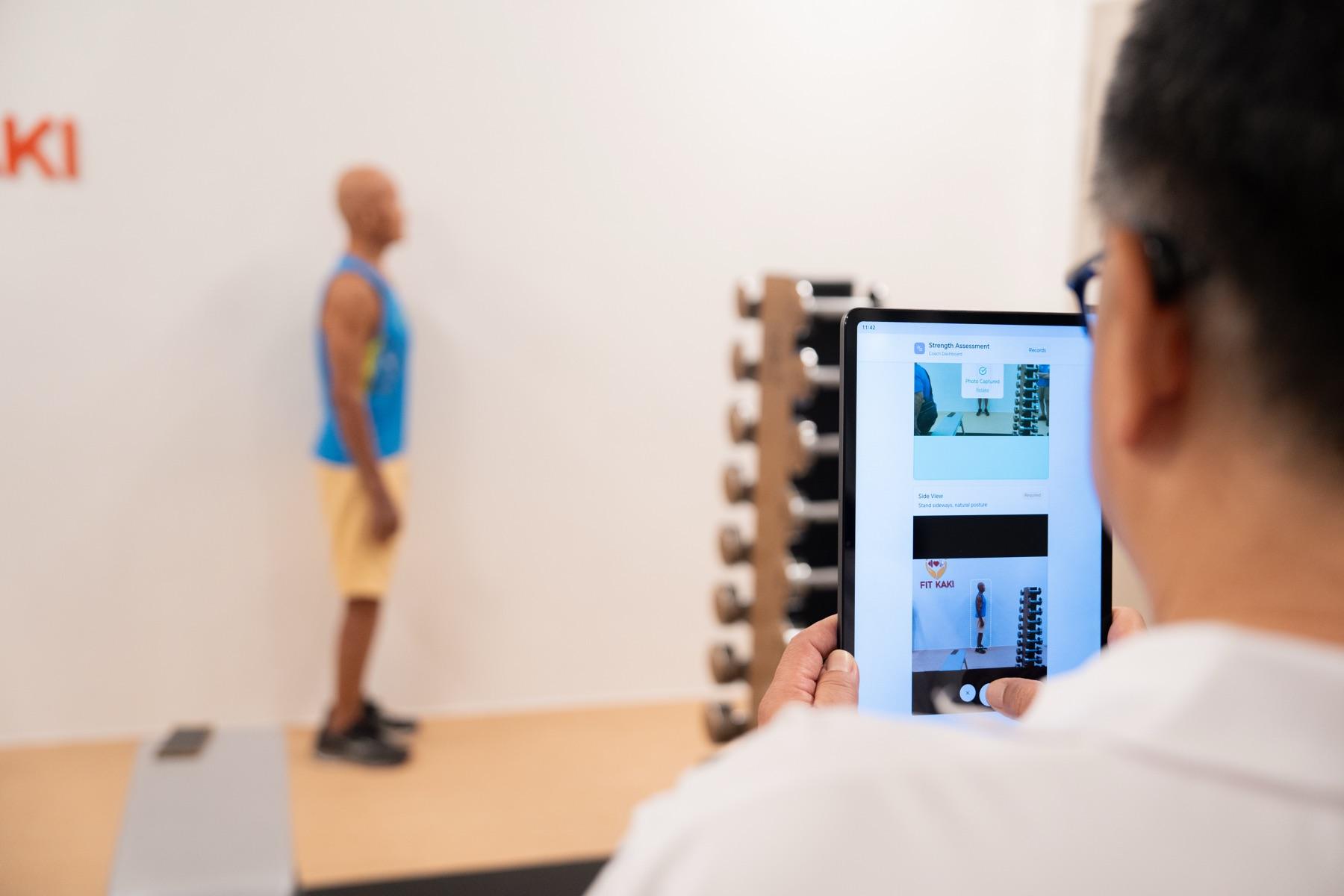
During your assessment, your coach also captures a posture snapshot in the Fit Kaki app. Train for twelve weeks, then see the two photos side by side. Building strength often changes how you stand and carry yourself — it is one of the changes members mention most, and the photos let you and your family see it.
Week 0Week 12
Tracking progress
Seeing progress with SAI
For members in the 12-week Strength Age Signature programme, Fit Kaki also uses the Strength Age Index, or SAI, as a progress score.
SAI helps us monitor changes in strength over time, so seniors and families can see whether strength is being maintained or improved — in plain numbers, reviewed together with your coach. And alongside the numbers, your week 0 and week 12 posture snapshots sit side by side: progress you can see, not just read.
Progress you can point to
Assessed at the start, reviewed across the programme — so effort turns into visible change, and families stay in the loop.
Good to know
Honest answers
Is Strength Age a medical diagnosis?
No. Strength Age is not a medical diagnosis. It is Fit Kaki’s practical way of helping seniors understand and track strength in a simple, relatable way. If you have medical concerns or have been advised to avoid exercise, please check with your doctor before starting.
Can strength training help reduce fall risk?
Strength training can help seniors build the leg strength, balance, and confidence needed for safer daily movement. While no programme can guarantee that falls will never happen, improving strength and stability can help reduce fall risk.
A note on safety
Strength Age is a practical guide, not a medical test. If you have medical concerns or have been advised to avoid exercise, please check with your doctor before starting.
Find out your Strength Age
The assessment is free, takes one visit, and gives you a clear starting point — for yourself or your parent.